
Garage floor epoxy colors: which one should you pick for a Utah garage?
Pick a mid tone flake blend if the garage gets daily use. Gray and tan blends with darker flecks hide the salt film that comes home on the tires. They hide tire marks too. A solid color reads cleaner in a shop. Metallic is for a space you show off.
We have coated concrete along the Wasatch Front since 2005, out of a shop in Centerville. Color is usually the last thing people settle, and the one they sit on longest. The prep and the system underneath the color are covered on our garage floor coating service.
What colors and finishes does a coated garage floor come in?
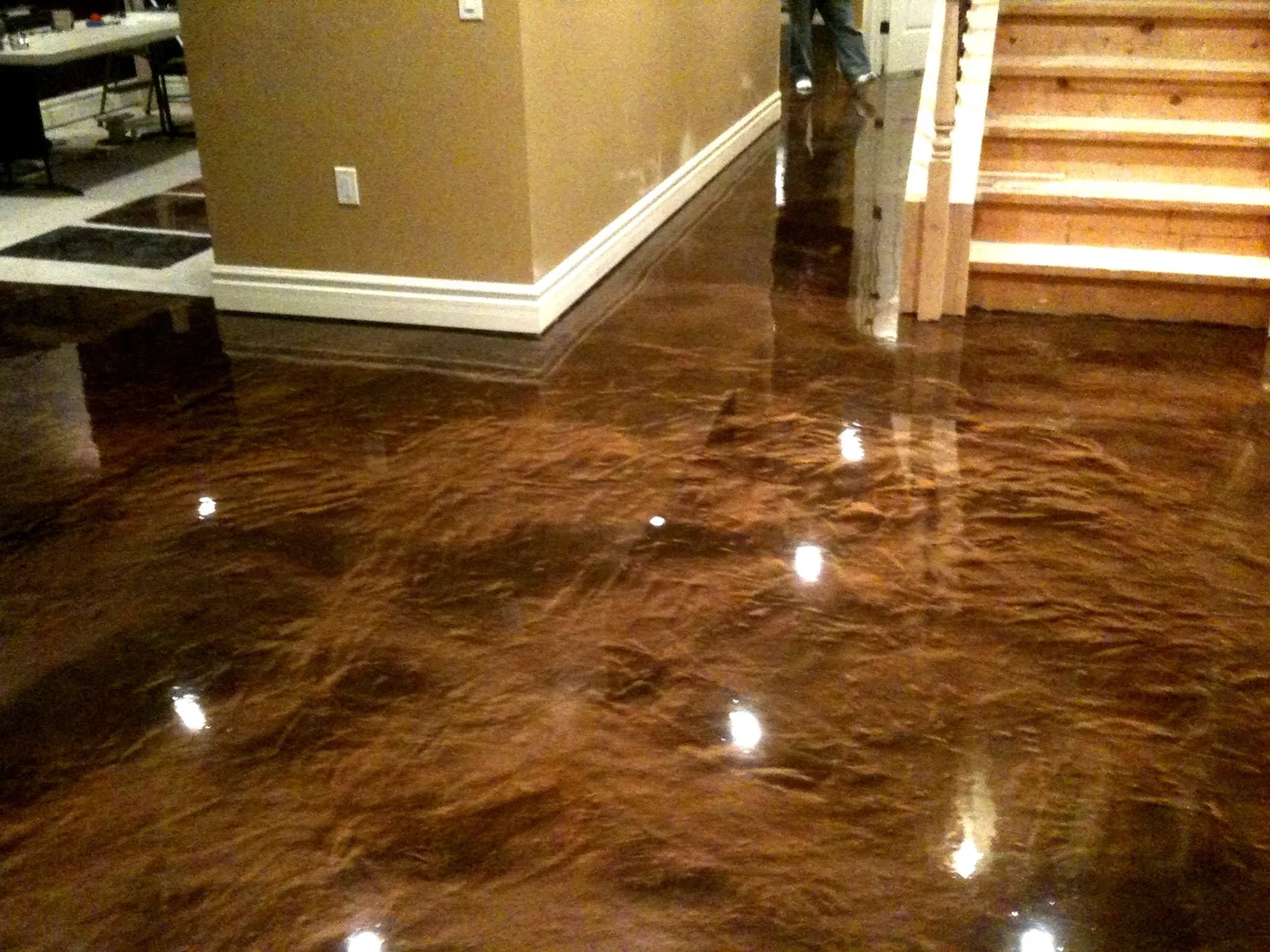
Three finishes cover it. A solid color is one pigmented coat with no speckle in it. A full flake floor broadcasts colored chips into the wet base coat until the base is buried. Metallic swirls reflective pigment through clear resin for a marbled look. Each one gets a clear top coat last.
Where the color sits is different in each. On a solid floor the color is in the base coat, and that is all you see. On a flake floor the chips carry the color and the base only peeks through at the edges. That is why the base gets picked to suit the blend. SureCrete pairs its Asphalt chip with a silver base and its Buckskin chip with an antique white base.
On a metallic floor the color moves. Pigment goes into clear resin and gets worked with a squeegee, so every square foot lands differently. That is a system of its own, covered on metallic epoxy floors.
We broadcast full flake in the color you pick, then a clear polyaspartic or urethane top coat goes on last. Most garages are a one day job.
Which garage floor colors do most people pick?
Look at what the flake makers keep in stock. SureCrete lists 12 standard flake colors and the names run to Gravel, Smoke, Asphalt and Buckskin. Resinwerks lists 18 standard blends. The shelf stock is grays, tans and black and gray mixes, and both makers will mix something custom on request.
That answer comes from the supply side. Factories keep what moves, and what moves is neutral. Neutral also does the practical job in a Utah garage. It hides what the car drags in.
| Color family | Look | Dust | Salt film | Tire marks | Light in the room | Best for |
|---|---|---|---|---|---|---|
| Mid gray flake blend | Speckled, neutral | Hides it | Hides it | Hides them | Even, low glare | A daily driver garage |
| Tan or beige flake blend | Warm, sandy | Hides it | Pale film blends in | Hides them | Warm and bright | Tan cabinets, brick walls |
| Black and gray flake blend | High contrast | Fair | Shows a little | Hides them | Darker room | Shops and hobby garages |
| Solid light gray | Clean and flat | Shows it | Shows it | Shows them | Bright | A floor that gets swept daily |
| Solid black or charcoal | Sharp, modern | Shows it badly | Shows it badly | Hides them | Dark, needs more light | Display space, not a winter garage |
| Solid white or off white | Bright, clinical | Shows it | Shows it | Shows them badly | Brightest, can glare | Indoor rooms |
| Metallic | Marbled, deep | Fair | Fair | Fair | Reflective, high shine | Finished basements and showpieces |
Do light or dark floors hide dirt, road salt and tire marks better?
Mid tones hide the most. UDOT uses salt brine to pre-treat the highways for ice. That brine rides home on the tires and dries pale on the floor. A dark floor shows every streak of it. A light floor hides salt and shows the black scuff a hot tire leaves. Mid tone flake hides both.
During storms the crews switch to salt, including regular white salt and high performance salt, plus grit and volcanic cinders. All of that ends up in the wheel wells and comes off in your garage. Then summer arrives and the same floor collects dust off the benches and dirt off the driveway.
Two colors need a harder look. Solid black looks sharp the day it cures and shows dust by the weekend. Solid white shows every tire mark and every drip off the mower. Both work. They just ask for more cleaning than a blend does.
How do flake size and the blend change the look?
Size changes the texture more than the color does. Torginol makes flake in six standard sizes. Quarter inch chips are the usual garage pick. Larger flake is more random in shape, so the floor reads busy and bold. Smaller flake is more consistent, so the floor reads tight and close to stone.
Density is the other dial. A full broadcast buries the base coat, so what you see is chip. A partial broadcast leaves the base showing between the chips, which reads lighter and thinner. SureCrete says the chips add a measure of slip resistance to the surface. That matters on a wet floor in February.
A high contrast blend, black chips over a light base, hides more than a blend of close tones. It also looks busier. If you want quiet, pick chips that sit within a shade or two of each other.
Does the color change UV yellowing, heat or glare?
Color does not change the chemistry. Epoxy ambers on its own. HTS Chemical calls epoxy an aromatic chemistry that will amber and chalk when exposed to UV light. That is why the clear coat on top is polyaspartic or urethane. HTS lists those as UV stable and non yellowing.
A white or pale gray floor shows a yellow cast sooner than a charcoal blend does. There is less color to cover it. That shows up first under a south facing door. The top coat is what holds it off. Ask what is going on top before you settle the color.
Glare runs the other way. A light floor throws light back into a garage with one small window. The whole room gets easier to work in. Gloss adds to that. If the shine bothers you, ask about the gloss level of the top coat before the crew mixes it.
How do you match the floor to cabinets, walls and cars?
Pick the floor to match the thing you are least likely to change. In most garages that is the cabinets or the door. Pull the dark flake in the blend toward the cabinet color, and let the lighter flake pick up the wall. A car is a bad anchor, because cars get traded.
Warm and cool matter more than the exact shade. Tan cabinets and brick sit better over a blend with brown and buff in it. White or slate cabinets sit better over a gray blend. A warm floor under a cool wall makes a finished garage look slightly off. Most people cannot say why.
A coated floor reads one step lighter than the chip did. The clear top coat adds shine, and the floor is big. Hold the sample lower than eye level when you judge it.
Does the color change what the floor costs?
Not inside a system. Gray costs what tan costs, because the chip and the labor are the same either way. What moves the price is the system, the size of the floor and the shape the slab is in. Metallic is a different system rather than a color choice, so it carries its own price.
| What the guides publish | Range | Source |
|---|---|---|
| Epoxy flooring, installed | $4 to $10 per square foot | HomeGuide |
| The materials share of that | $1 to $5 per square foot | HomeGuide |
| An epoxy garage floor, any size | $1,200 to $8,600 | HomeGuide |
| A 2 car garage | $1,600 to $5,800 | HomeGuide |
| Typical spread for the whole job | $1,650 to $3,494, average $2,525 | HomeAdvisor |
| A one car garage, low end | as little as $750 | HomeAdvisor |
| A three car garage, high end | up to $9,000 | HomeAdvisor |
| Labor share of the total | 33% to 60% | HomeAdvisor |
None of those rows are our prices. They are national ranges published by cost guides, and they cover every slab condition in the country. HomeAdvisor puts labor alone at 33% to 60% of the total. The slab moves the number more than the color ever will.
A real number for your floor needs an on-site look. Square footage, cracks, spalling and moisture all change the job, and none of that reads over the phone. Published garage numbers by size sit in what an epoxy garage floor costs in Utah. The top coat moves the price too, and that is covered in how epoxy and polyaspartic differ.
How should you pick the color in your own garage?
See it on your own slab before you sign. A chip in a sample book is a small square under the wrong light. Ask for a sample board and set it on the garage floor. Look at it with the door open. Then look again at night, under the bulbs you actually have.
Two more checks help. Set the board beside the cabinet door rather than on top of it, so you are comparing two upright surfaces. Then stand up and step back. A busy blend calms down once you see it from standing height. That is how you will see this floor every day.
The same blends go downstairs. Basement light is worse and the floor gets looked at more, so the sample check matters even more there. That work is a basement floor coating. A below grade slab gets a moisture test before any system is picked.
Complete Concrete Coatings has coated Utah concrete since 2005, out of a shop in Centerville. Tell us the cabinet color and the room, and we bring sample boards and set them on your slab. Estimates are free, and you get a written number for that floor before the crew leaves. Call (801) 347-4518 Monday through Friday, 8am to 5pm, or send the form on our contact page.